UMD Alum Argyro Kavvada Makes the Most of NASA’s Many Missions
As program scientist and manager for NASA’s Earth Modeling Nexus, Argyro Kavvada (M.S. ’13, Ph.D. ’14, atmospheric and oceanic science) is helping create a more unified understanding of Earth.
As NASA launches more satellites into orbit and builds more intricate computer models simulating Earth, it’s Argyro Kavvada’s job to get these disparate efforts to talk to each other.
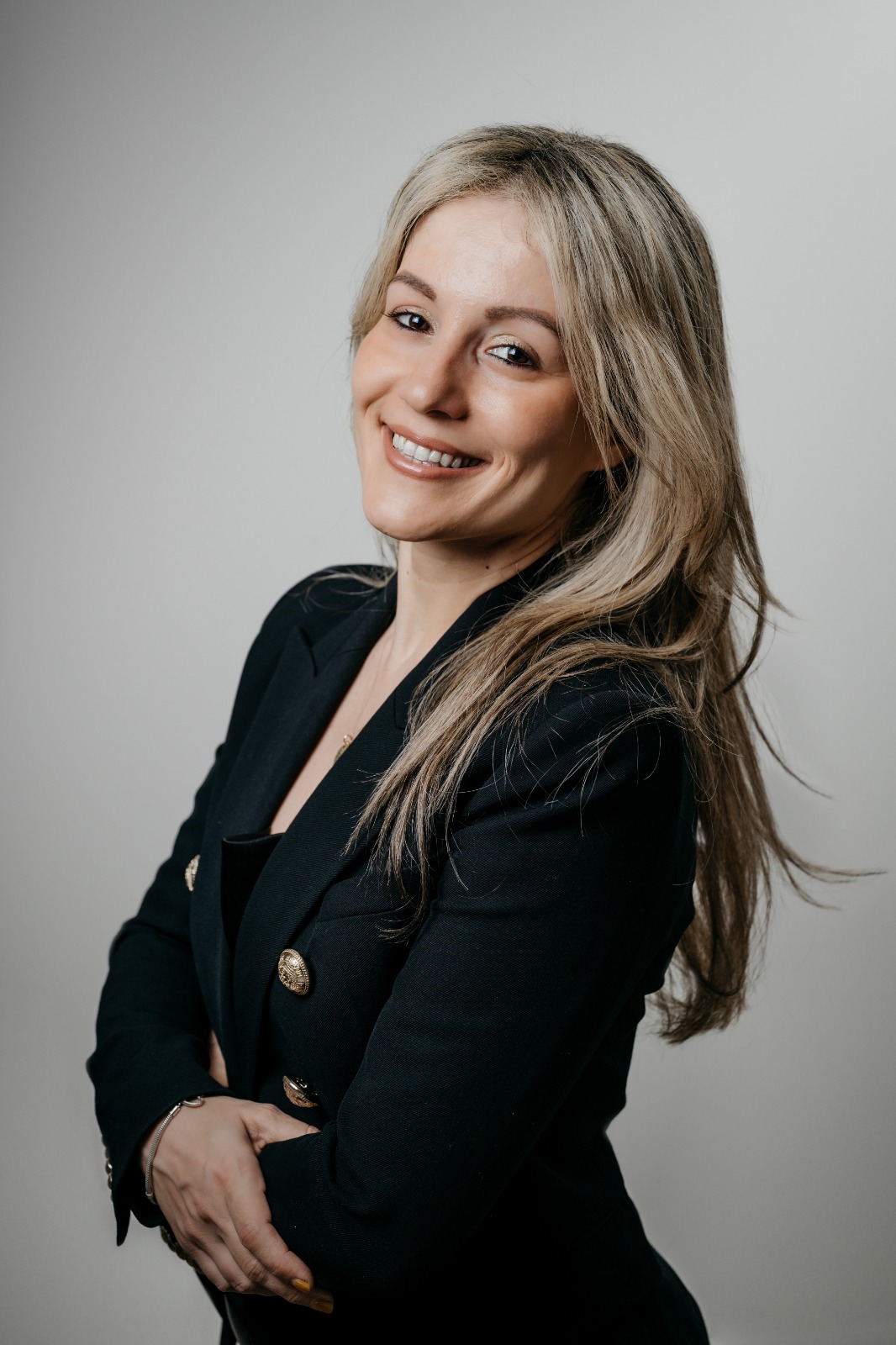
Kavvada (M.S. ’13, Ph.D. ’14, atmospheric and oceanic science) is program manager of NASA’s Earth Modeling Nexus. Nexus unifies NASA's state-of-the-art Earth system observations and models, providing a more coherent understanding of our planet. The framework integrates models that operate on different timescales and cover different parts of the planet—such as land, air or sea—to simulate complex interactions between Earth processes.
This framework improves weather predictions and long-lead projections, with societal benefits, from enabling farmers to predict soil moisture for agricultural management to assessing the risk of extreme weather conditions that could arise from this year’s impending super El Niño.
“Connecting observation-driven Earth system modeling with evolving user needs to address societal challenges like risks associated with disasters, food insecurity and air pollution exposure really excites me,” Kavvada said.
Kavvada’s interest in Earth science grew from an early aptitude in mathematics and physics. She knew she wanted to apply her quantitative skills for good, so after completing a bachelor’s degree in physics from Johns Hopkins University and a master's degree in applied mathematics and statistics from Georgetown University, she enrolled in graduate school at the University of Maryland to work with Atmospheric and Oceanic Science (AOSC) Distinguished University Professor and Chair Sumant Nigam.
At UMD, Kavvada studied a pattern of sea surface temperature variability called the Atlantic Multidecadal Oscillation (AMO), which fluctuates over timescales of 30 to 70 years. This climate signal has drawn attention from scientists and policymakers in recent decades because it strongly influences global climate and extreme weather events. Kavvada’s work at UMD revealed new insights into how the AMO affects Earth systems and the climate.
In addition to the technical skills Kavvada mastered, UMD’s location allowed her to hone her science communication skills. She gained experience conveying the importance of Earth science to non-scientists—for example, through partnerships with the Maryland Science Center in Baltimore and the Smithsonian's National Zoo in Washington, D.C.
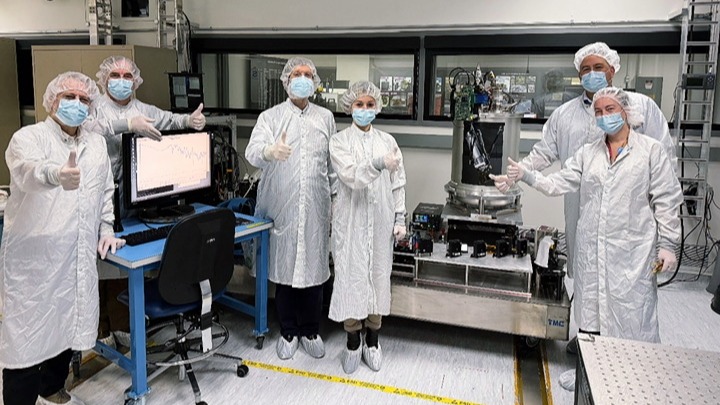
Kavvada also valued the proximity to federal government agencies and the ease of networking at Maryland. Scientists in the civil service regularly visited campus to give seminars and collaborate with AOSC professors, and the connections Kavvada built during graduate school ultimately paid off. After graduating in 2014, a scientist she collaborated with at UMD recruited her to join Booz Allen Hamilton and work as a contractor for NASA. As lead scientist there, Kavvada led contract management, staff and business development and also became the founding executive director of the international group, Earth Observations for the Sustainable Development Goals for NASA. Eventually, Kavvada recruited other UMD graduates to join her team at Booz Allen Hamilton.
“AOSC was a great department,” Kavvada said. “I really enjoyed my time there.”
In 2023, Kavvada joined NASA as a federal employee. In her first role, she led an interagency effort collaborating with the National Oceanic and Atmospheric Administration, the United States Environmental Protection Agency, and the National Institute of Standards and Technology to create the U.S. Greenhouse Gas Center—a virtual center that provides open access to trusted data and models on trace gases.
Then, about a year ago, Kavvada moved into her current role as program manager for the Earth Modeling Nexus and leading development of NASA's new Earth science modeling strategy to advance a shared direction for modeling our home planet. She is also the program scientist for various satellite and airborne missions, including the Earth Surface Mineral Dust Source Investigation (EMIT); Earth Venture Suborbital–4 (EVS-4); and Explorer for Artemis Geology, and Lunar, and Earth (EAGLE).
Although she didn’t know early on that she wanted to be an Earth scientist, Kavvada is grateful to be working on some of the field's most pressing issues now. And for a scientist seeking to apply her skills for the greater good, there was no better place to land.
“Working for NASA is spectacular. There is a vision of advancing science for the benefit of society,” she said. “And there is never a dull moment. There is always more to learn.”